Ready to Book an Appointment?
Our team is here to help you with all your dental and medical needs.
For general information only — not a substitute for professional advice. In an emergency call 999, visit A&E, or call NHS 111.
Our team is here to help you with all your dental and medical needs.
For general information only — not a substitute for professional advice. In an emergency call 999, visit A&E, or call NHS 111.
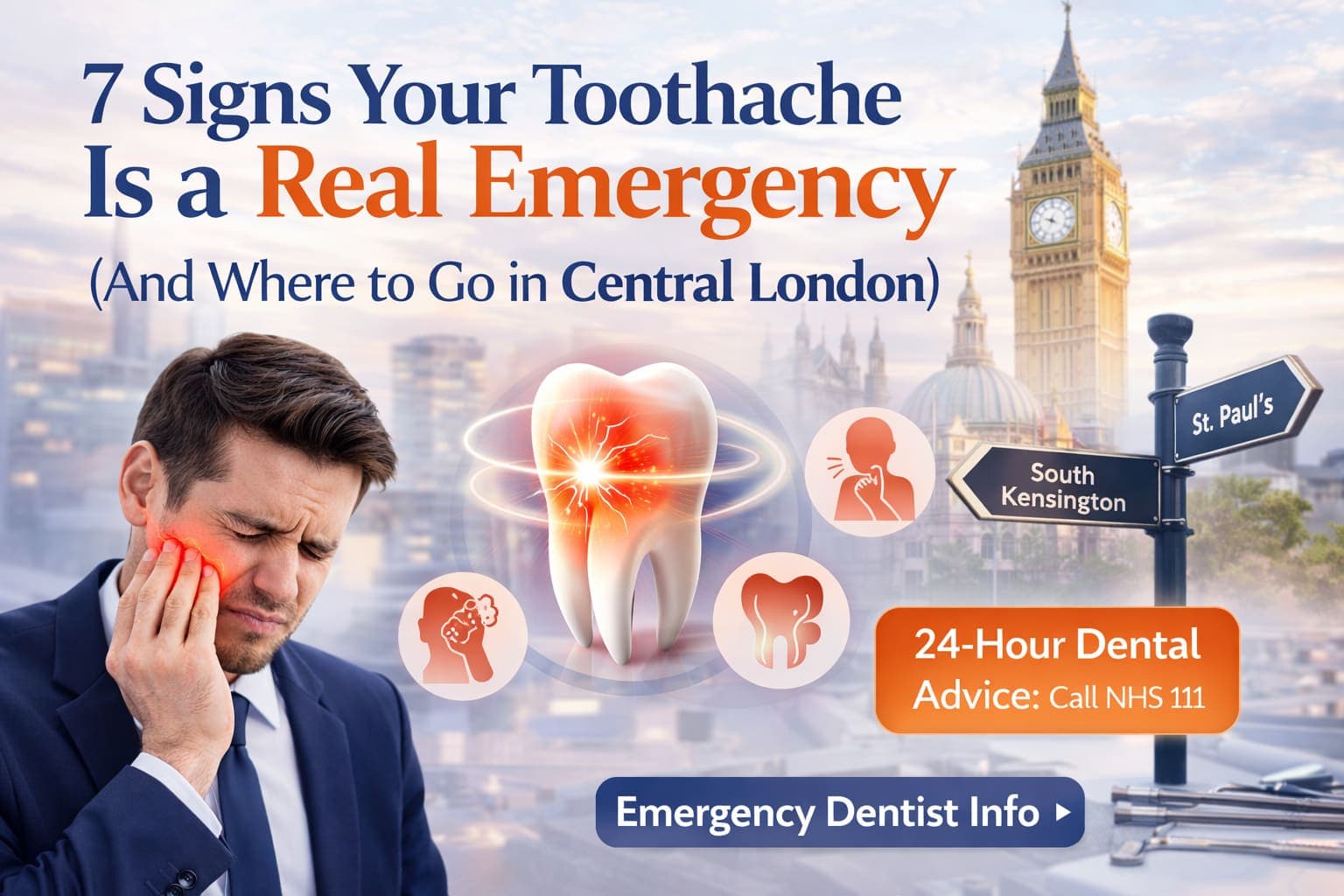
Toothache can range from a mild, occasional twinge to severe, unrelenting pain that disrupts sleep and daily activities. When pain is significant, a common concern is whether it warrants seeing an emergency dentist. In London, dental practices including MD offer urgent dental assessments for patients experiencing symptoms that may indicate a more serious underlying issue. Not every toothache constitutes an emergency, but certain signs suggest that prompt professional evaluation is advisable rather than waiting for a routine appointment.
A throbbing toothache may indicate inflammation within the tooth, often involving the dental pulp. While not every throbbing pain is an emergency, persistent or worsening symptoms — particularly if accompanied by swelling or fever — should be assessed by a dentist to determine whether urgent care is required.
Throbbing dental pain is often associated with pulpitis, a condition where the nerve tissue inside the tooth becomes inflamed. This inflammation can create pressure within the rigid confines of the tooth, producing a pulsing sensation that many patients describe as one of the most uncomfortable forms of dental pain. The discomfort may worsen at night when lying down, as changes in blood flow can increase pressure around the affected area.
Clinical assessment helps establish whether the inflammation is reversible or whether the nerve tissue has been significantly compromised. This distinction is important because it influences the treatment approach. Signs that a throbbing toothache may benefit from urgent assessment include:
If you are experiencing any of these symptoms, it is advisable to contact a dental practice for guidance. A clinical examination, potentially supported by dental imaging, can help identify the source of pain and inform appropriate next steps.
Gum swelling alongside dental pain may be associated with a dental abscess — a localised collection of pus resulting from bacterial infection. An abscess requires professional assessment and management, as the infection is unlikely to resolve without appropriate dental intervention.
A dental abscess can develop at the tip of a tooth root (periapical abscess) or within the gum tissue itself (periodontal abscess). Both types may produce visible swelling, tenderness, and sometimes a noticeable lump on the gum. The infection creates pressure and inflammation in the surrounding tissues, which can cause significant discomfort.
Prompt evaluation is important because dental infections can sometimes progress if left unmanaged. Signs that gum swelling may require an urgent dental appointment include:
If you notice any of these symptoms, arranging a dental assessment is advisable. Management may involve drainage of the abscess, appropriate medication where clinically indicated, and treatment to address the underlying cause of the infection.
Whether dental pain can wait depends on the nature and severity of your symptoms. Mild, intermittent discomfort without swelling or fever may often be managed with appropriate over-the-counter pain relief until a routine appointment can be arranged.
However, certain symptoms are best not left unattended over a weekend or extended period. Persistent swelling, fever, difficulty swallowing, or pain that is worsening rather than improving may indicate that the underlying issue requires more timely attention. Delaying assessment in these circumstances can sometimes increase the complexity of any treatment needed.
As a general guide, if your symptoms are manageable with standard pain relief and are not accompanied by swelling or signs of infection, waiting for a scheduled appointment may be reasonable. If you are uncertain, contacting a dental practice or NHS 111 for advice can help you determine the appropriate course of action.
Recognising the signs that warrant urgent dental attention can help you seek appropriate care promptly. The following indicators suggest that arranging an emergency dental assessment would be advisable:
If you are experiencing any of these signs, contacting a dental practice during clinic hours is recommended. For symptoms occurring outside normal hours, NHS 111 can provide guidance on accessing appropriate urgent dental care.
When you contact a dental practice about urgent symptoms, the process typically begins with a telephone assessment. This allows the clinical team to understand your symptoms, gauge their severity, and prioritise your care appropriately. Emergency dental triage helps ensure that patients with the most pressing needs are seen promptly while also providing guidance for those whose symptoms may be managed with interim measures.
The triage process generally involves the following steps:
It is important to understand that emergency dental care focuses on addressing the immediate concern — typically relieving pain, managing infection, or stabilising a damaged tooth. Comprehensive treatment may require a follow-up appointment once the acute issue has been resolved.
If you are experiencing dental pain or symptoms that may require urgent attention, knowing where to access care in Central London can reduce uncertainty during what is often a stressful time. MD operates two dental clinics conveniently located for patients across the city.
Our South Kensington Dental Clinic is situated in the heart of South Kensington, providing accessible urgent dental care for patients in West and Central London. The clinic offers a range of dental services including emergency assessments during clinic hours.
Our St. Paul's (City of London) Dental Clinic serves patients in the City of London and surrounding areas. Located close to St Paul's Cathedral, this clinic is well-positioned for professionals and residents seeking urgent dental attention in East Central London.
Both clinics aim to accommodate urgent cases during opening hours, with the team working to arrange same-day appointments where clinically appropriate and availability permits. For further details on our Central London emergency dental locations, including opening hours and how to contact us, please visit the relevant clinic pages.
If you are experiencing swelling, severe pain, or symptoms suggestive of infection, contact our clinic during opening hours to arrange an urgent assessment. Our team can help determine whether your symptoms require immediate attention or whether they can be appropriately managed with a scheduled appointment.
For urgent dental advice outside normal clinic hours, you can call NHS 111 (England), which operates 24 hours a day and can direct you to appropriate urgent dental care services if needed. NHS 111 advisors can help assess your symptoms and, where necessary, arrange access to an out-of-hours dental provider in your area.
It is important to note that NHS 111 provides advice and signposting rather than replacing emergency medical services. If you are experiencing a medical emergency — such as severe difficulty breathing, uncontrolled bleeding, or significant facial swelling affecting your airway — contact 999 or attend your nearest accident and emergency department immediately.
Not always. A throbbing toothache can indicate inflammation of the dental pulp, but it may also result from temporary sensitivity or minor irritation. However, if the pain is severe, persistent, worsening, or accompanied by swelling or fever, an urgent dental assessment is recommended to determine the cause.
A dental infection that is not appropriately managed may spread to surrounding tissues. In uncommon cases, this can involve the jaw, neck, or other areas. Signs such as facial swelling, difficulty swallowing, or fever suggest the infection may be progressing and should prompt urgent professional assessment.
NHS 111 can provide advice and help you access urgent dental services outside normal clinic hours. They can direct you to an out-of-hours dental provider if needed. For severe symptoms such as significant facial swelling or difficulty breathing, contact emergency services directly.
Many dental practices in Central London, including MD, aim to offer same-day or next-day appointments for urgent cases during clinic hours. Availability depends on the nature of the concern and current clinical schedules. Contacting the practice directly allows the team to assess urgency and arrange an appropriate appointment.
An emergency dental visit typically involves a clinical examination, assessment of symptoms, and any necessary imaging such as X-rays. The dentist will identify the likely cause of your pain and discuss management options. Where clinically appropriate, treatment such as drainage, dressing, or pain relief may be provided during the same visit.