Ready to Book an Appointment?
Our team is here to help you with all your dental and medical needs.
For general information only — not a substitute for professional advice. In an emergency call 999, visit A&E, or call NHS 111.
Our team is here to help you with all your dental and medical needs.
For general information only — not a substitute for professional advice. In an emergency call 999, visit A&E, or call NHS 111.
Toothache is one of the most common reasons adults in the United Kingdom seek urgent dental advice. Whether caused by decay, infection, or damage, dental pain can be distressing and disruptive. Finding the best painkiller for toothache can help manage discomfort in the short term, but it is important to understand that painkillers manage symptoms rather than treat the underlying cause. Professional dental assessment remains essential for resolving the source of the pain.
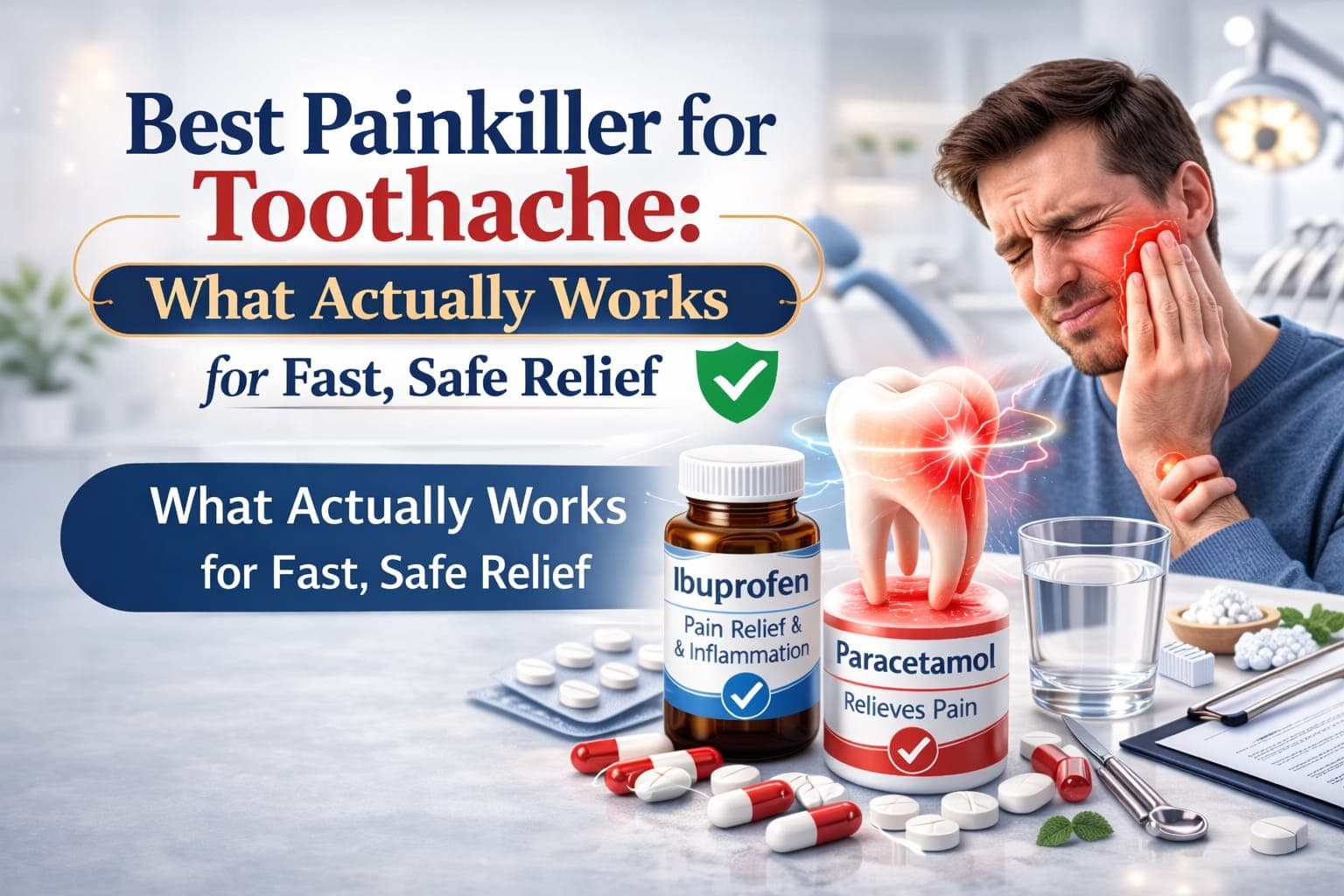
The best painkiller for toothache is usually ibuprofen, as it reduces both pain and inflammation. Paracetamol can also relieve discomfort, especially for those unable to take anti-inflammatory medicines. However, painkillers only provide temporary relief and do not treat the underlying dental problem.
Ibuprofen is often recommended as a first-line option because toothache frequently involves inflammation of the dental pulp or surrounding tissues. By reducing this inflammation, ibuprofen addresses a key component of the pain rather than simply masking it. Paracetamol works through a different mechanism, targeting pain signals in the central nervous system, making it a useful alternative for patients who cannot take anti-inflammatory medicines due to conditions such as asthma, stomach ulcers, or certain other health considerations.
It is important to follow the dosage instructions provided on the packaging or by a pharmacist. Taking more than the recommended dose does not improve pain relief and may increase the risk of side effects.
Ibuprofen is generally considered more effective for toothache because it reduces inflammation as well as pain. Paracetamol can help with discomfort but does not address swelling. For some patients, alternating the two under appropriate guidance may provide more sustained relief than either alone.
| Feature | Ibuprofen | Paracetamol |
|---|---|---|
| Reduces inflammation | Yes | No |
| Suitable for stomach ulcers | No | Usually safer |
| Works for swelling | Yes | Limited |
| Suitable during pregnancy | Seek medical advice | Generally considered safer |
The choice between ibuprofen and paracetamol depends on individual health circumstances. Patients with asthma, kidney problems, or a history of stomach ulcers should exercise caution with ibuprofen and seek advice from a pharmacist or GP. Paracetamol is generally well-tolerated but must be taken within recommended limits, as exceeding the maximum daily dose can cause serious liver damage.
In some cases, alternating ibuprofen and paracetamol at staggered intervals may offer more effective pain management. However, this approach should be discussed with a healthcare professional to ensure it is appropriate for your circumstances.
Toothache occurs when the nerve inside a tooth or the surrounding tissue becomes irritated or inflamed. The pain can range from a dull, persistent ache to sharp, intense discomfort, and identifying the underlying cause is essential for effective treatment.
Whatever the cause, toothache that persists for more than a day or two typically indicates a problem that requires dental attention. An emergency dentist in London can assess the source of pain and recommend appropriate treatment to address the underlying issue.
The best tablets for toothache available over the counter in the UK are ibuprofen and paracetamol. Both are widely accessible from pharmacies and supermarkets without a prescription, and each offers a different approach to managing dental pain.
Always follow the guidance provided by your pharmacist when purchasing pain relief. Check for contraindications, especially if you are taking other medication, are pregnant, or have existing health conditions. Avoid prolonged self-medication, as this may mask a worsening dental problem.
If over-the-counter painkillers do not provide adequate relief, your dentist may prescribe a stronger medication. Prescription painkillers are only issued when clinically necessary and are intended for short-term use alongside dental treatment, not as a long-term solution.
Depending on the severity of your pain and your medical history, your dentist may consider prescribing one of the following:
Prescription painkillers, particularly those containing codeine or other opioids, carry a risk of side effects including drowsiness, nausea, and constipation. They may also interact with other medications. For these reasons, they are prescribed at the lowest effective dose for the shortest possible duration.
Opioid-based painkillers also carry a risk of dependency if used beyond the prescribed course. Your dentist will only recommend these medications when the clinical benefit outweighs the risks, and they should always be taken exactly as directed. Self-prescribing or obtaining prescription painkillers without professional oversight is not advisable.
In most cases, prescription painkillers are a bridge to manage pain while the underlying dental problem is treated. The definitive solution for toothache is almost always dental treatment itself — such as a filling, root canal, or extraction — rather than ongoing medication.
For fast relief at home, taking ibuprofen at the recommended dose is typically the most effective first step. In addition, several home measures can complement pain relief while you arrange a dental appointment.
These are short-term measures only and are not a substitute for professional dental care. If pain is severe, worsening, or accompanied by swelling, you should seek a dental assessment promptly.
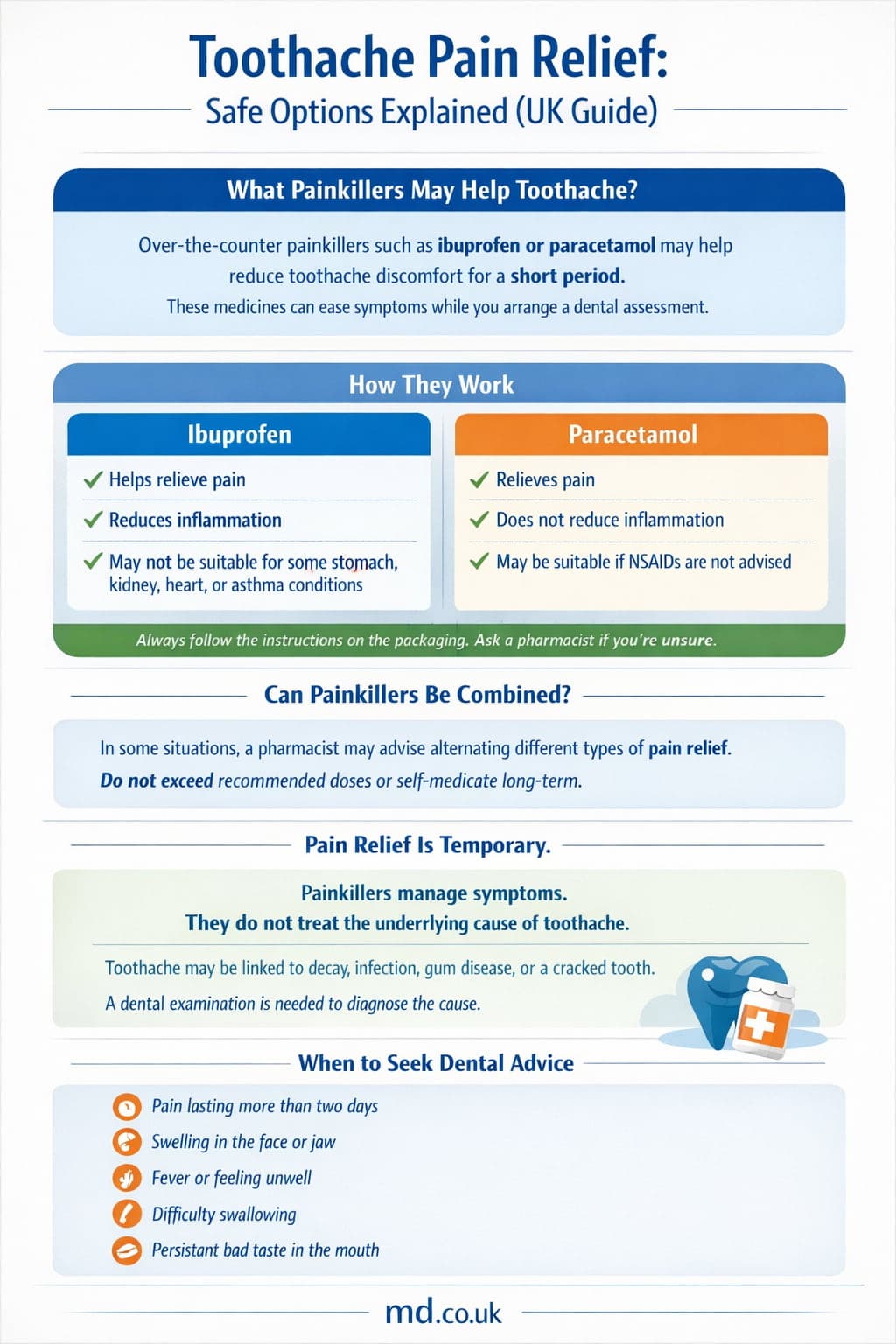
You should see a dentist if toothache lasts more than 48 hours, is severe enough to disrupt sleep or daily activities, or is accompanied by swelling, fever, or difficulty swallowing. These symptoms may indicate infection or another condition that requires prompt professional treatment rather than continued self-management.
Watch for the following signs that warrant prompt dental assessment:
If you are experiencing persistent or worsening symptoms, arranging an urgent dental appointment allows a dentist to identify the cause of your pain and begin appropriate treatment. Early assessment can often lead to simpler, more comfortable treatment outcomes.
Antibiotics may cure some toothaches. They are usually be prescribed when there is evidence of a spreading bacterial infection that is causing pain. Dental treatment, such as a filling, root canal, or extraction, is may be required.
In cases where infection has spread beyond the immediate area of the tooth — for example, causing significant facial swelling or systemic symptoms such as fever — a dentist may prescribe a short course of antibiotics to help control the infection before definitive treatment can be carried out. However, antibiotics alone will not resolve the source of infection.
Overuse of antibiotics contributes to antimicrobial resistance, which is a significant public health concern. For this reason, antibiotics are prescribed judiciously and only when clinically indicated, in line with current UK prescribing guidelines.
Taking painkillers safely is essential for effective toothache management without risking side effects. Follow these guidelines when using over-the-counter pain relief:
Medical disclaimer: This article provides general information only and is not a substitute for professional dental or medical advice. Always read the patient information leaflet and consult a pharmacist, dentist, or GP if you are unsure whether a medication is suitable for you.
While painkillers offer valuable short-term relief, it is important to remember that toothache is a symptom of an underlying problem. Relying solely on pain medication without seeking dental treatment can allow the condition to progress, potentially leading to more extensive treatment being needed.
Untreated tooth decay can deepen until it reaches the nerve, potentially requiring root canal treatment rather than a straightforward filling. Dental infections can spread to surrounding tissues or, in rare cases, to other parts of the body. Impacted wisdom teeth causing repeated episodes of pain or infection are unlikely to improve without professional intervention.
Addressing dental problems early typically results in simpler treatment, better outcomes, and less discomfort overall. If you are experiencing toothache, arranging a dental assessment is the most effective step towards lasting relief.
For over-the-counter options, ibuprofen is generally considered the most effective painkiller for toothache because it addresses both pain and inflammation. If pain persists despite taking recommended doses, you should seek dental advice rather than increasing the dose or switching to stronger medication without professional guidance.
Over-the-counter painkillers for toothache are intended for short-term use only, typically no more than a few days. If you find yourself needing pain relief for longer than 48 to 72 hours, this suggests an underlying dental issue that requires professional assessment. Prolonged use of painkillers can carry health risks.
Some mild toothache may settle on its own, particularly if caused by temporary sensitivity. However, toothache caused by decay, infection, or damage will generally not resolve without dental treatment. Pain that disappears suddenly may indicate that the nerve has died, which can lead to abscess formation and requires professional care.
Ibuprofen and paracetamol can be taken together or alternated, as they work through different mechanisms. However, you should follow recommended doses for each medication separately and seek advice from a pharmacist or dentist if you are unsure. Do not take multiple products containing the same active ingredient.
Antibiotics are not routinely prescribed for toothache. They may be considered when there are signs of spreading infection, such as facial swelling or fever. Most dental pain requires treatment of the underlying cause, such as a filling or extraction, rather than antibiotics alone.
Taking ibuprofen at the recommended dose typically provides the fastest over-the-counter relief for toothache. Applying a cold compress to the outside of the cheek and rinsing gently with warm salt water may also help reduce discomfort. These are temporary measures, and a dental appointment should be arranged promptly.
Yes. If over-the-counter painkillers do not provide sufficient relief, your dentist may prescribe stronger options such as co-codamol, dihydrocodeine, or prescription-strength anti-inflammatories. These are intended for short-term use only and are prescribed alongside dental treatment to address the underlying cause of pain.
This article is for general informational and educational purposes only. It is not intended as, and should not be relied upon as, medical or dental advice, diagnosis, or treatment. The content does not replace a consultation with a qualified dentist, doctor, or other healthcare professional.
Always seek the guidance of your dentist, GP, or pharmacist before taking any medication, including over-the-counter painkillers. Individual suitability depends on your medical history, current medications, and personal health circumstances.
No guarantees are made regarding the effectiveness of any treatment, medication, or home remedy mentioned in this article. Outcomes vary between individuals, and professional assessment is always recommended.
This content was reviewed for accuracy at the time of publication (20 February 2026). Medical and dental guidance may change over time; readers are encouraged to verify information with a registered healthcare professional.